
Listening, redefined
Modern poultry production is complex, fast-moving, and unforgiving of delayed information. By the time problems become visible—changes in health, welfare, or infrastructure—outcomes are often already affected.
Yet inside every poultry house, the flock is continuously signaling. Through sound, birds express changes in comfort, stress, health, and environmental conditions long before those changes appear in traditional metrics. For decades, those signals have been present—but difficult to capture, interpret, and use at scale.
We exist to change that.
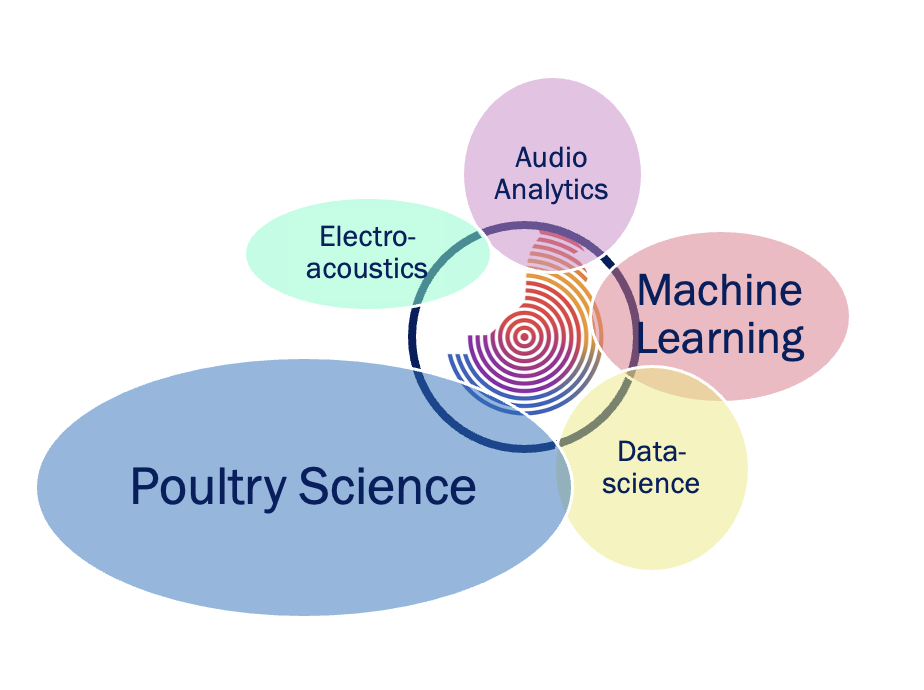
AudioT’s vision is to give poultry producers the ability to listen continuously to their flocks and facilities, transforming everyday barn sound into meaningful biological and operational insight. By making animal behavior measurable through acoustics, we aim to bring welfare, health, and performance into the same real-time decision framework.
Better listening enables earlier awareness, better timing, and more informed action—supporting both animal welfare and efficient, resilient poultry production.
Bespoke Solutions
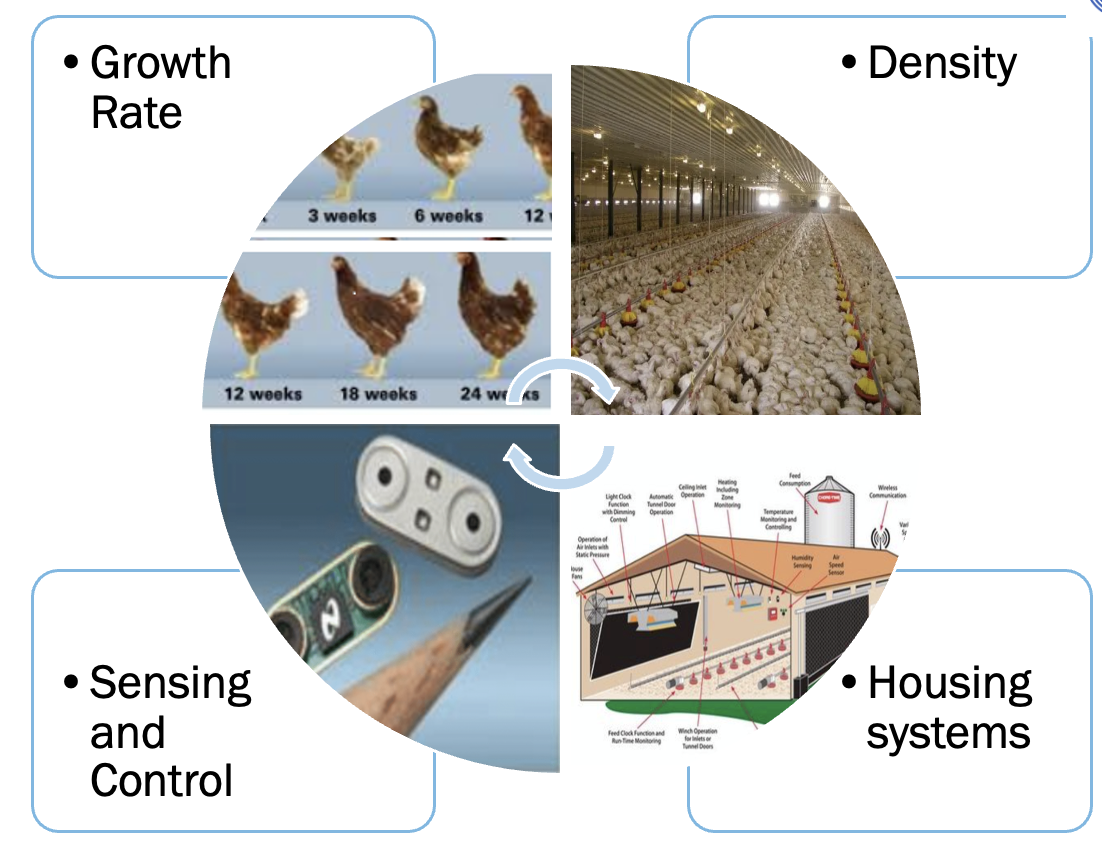
AudioT builds AI-driven acoustic monitoring systems designed specifically for commercial poultry environments.
Our systems use distributed microphone arrays installed throughout poultry houses to continuously capture ambient sound—day and night, in dusty conditions, and without disrupting normal operations. Unlike cameras or manual observation, acoustic monitoring works reliably in real farm conditions and scales naturally with flock size.
Using signal processing and machine learning, AudioT analyzes vocalizations and background sounds to identify patterns associated with:
Normal flock behavior
Stress or distress
Respiratory disease indicators, such as coughing
Environmental or equipment issues
Unusual or abnormal activity within the house
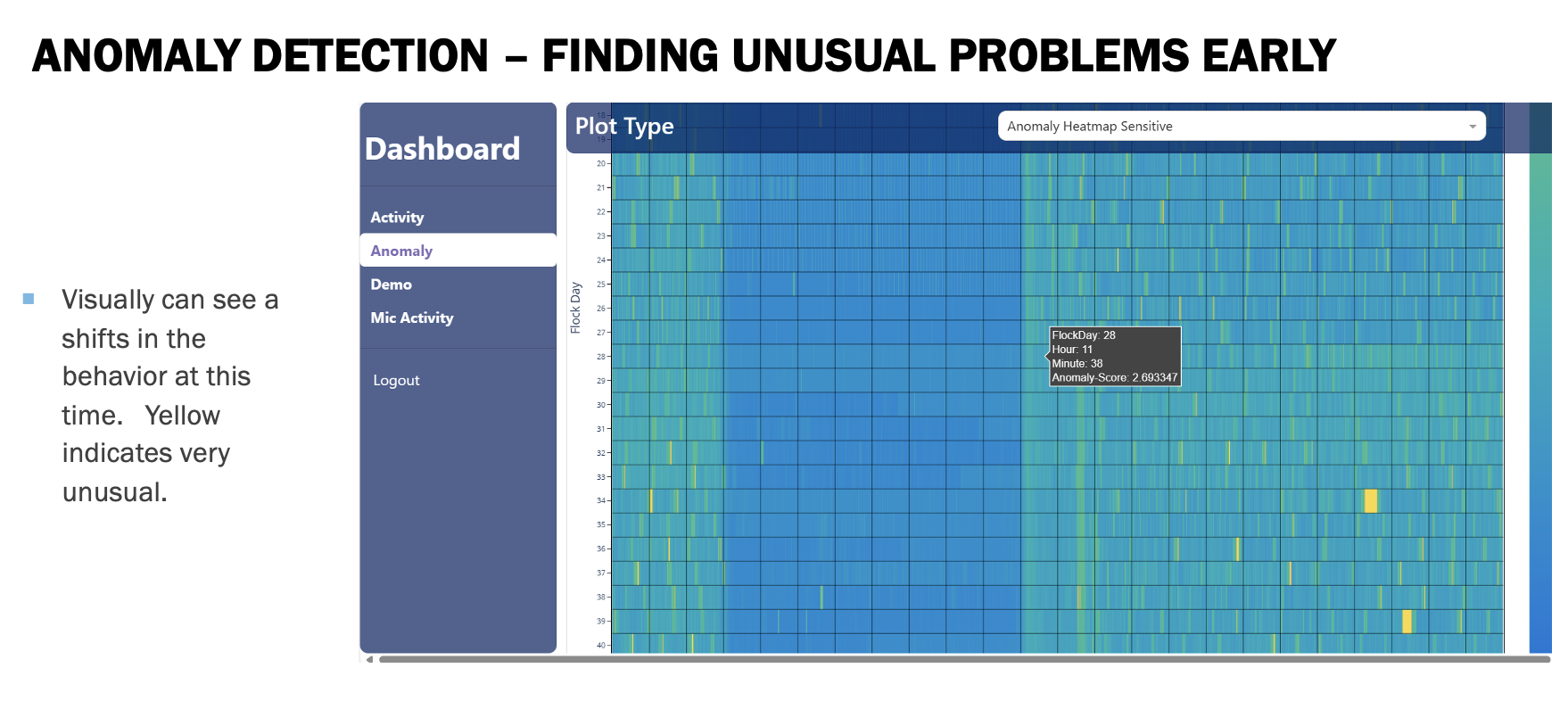
When sound patterns deviate from expected baselines, the system generates actionable alerts—often pinpointing where issues are emerging—so producers can respond earlier and more precisely.
By treating sound as continuous biological and operational feedback, AudioT helps producers:
Detect welfare and health issues sooner
Improve productivity, uniformity, and system stability
Reduce losses related to disease or equipment failure
Support documentation and reporting around welfare metrics
The result is a practical decision-support tool that integrates naturally into precision livestock farming systems—complementing existing sensors, workflows, and human expertise rather than replacing them.
How we do it
AudioT combines acoustic sensing, signal processing, and machine learning to translate barn sound into usable insight.
We deploy distributed microphone arrays throughout poultry houses to capture continuous audio data in real production conditions. These systems are designed to operate reliably in dust, low light, and high-noise environments—without interfering with daily farm operations.
Captured audio is processed using signal processing techniques to isolate relevant vocal and environmental features. Machine learning models then analyze patterns over time, learning what “normal” looks like for a given flock and identifying meaningful deviations as conditions change.
Rather than relying on fixed thresholds alone, the system adapts to context—accounting for flock age, housing conditions, and baseline variability. When significant changes occur, insights are surfaced as clear, actionable alerts that fit into existing workflows.
By focusing on continuous listening and pattern recognition, AudioT turns sound—something every poultry house already produces—into a reliable source of biological and operational feedback.
Are you a Poultry farmer or production partner?
Let’s Work Together
We are selectively partnering with a small number of poultry farms to participate in pilot deployments of our acoustic monitoring technology.
These pilots are designed for operations that are interested in working closely with us to evaluate how continuous acoustic data can inform flock health, welfare, and operational decision-making. Successful pilot partners are typically data-curious, open to iteration, and willing to engage in a structured evaluation process.
If you’re interested in being considered for a pilot, please complete the form below with details about your operation and what you’re hoping to learn. We’re especially interested in understanding your production environment, current challenges, and how you think behavioral data could add value.
We review all pilot inquiries carefully and will follow up within 48 hours to discuss fit, scope, and next steps.